The Work Didn’t Change Subjects
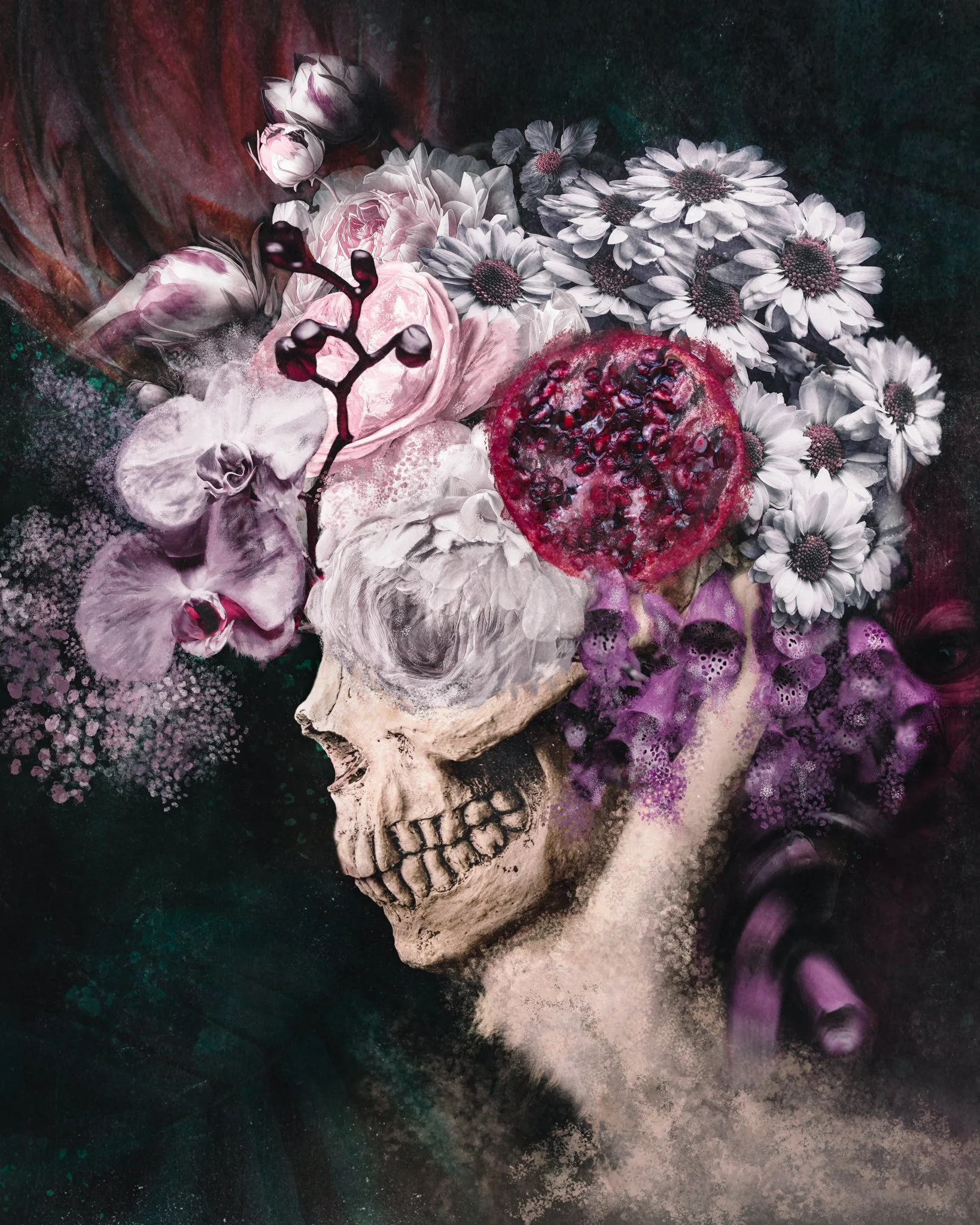
Multiple views will reveal someone else staring back at you. Transmogrification of Blood and Bone (2023) is displayed at The Apotehcary.
I sat down this morning intending to write a brief explanation for my website.
The goal was simple enough: explain the shift between the symbolic composite photographs I made in prior to 2025 and How to Make a Ghost.
At first glance, they seem very different.
The earlier work was constructed and layered. It relied on symbolism, hidden details, and narratives embedded within the frame. Some photographs revealed themselves slowly. A viewer might return to an image multiple times before noticing something that had been there all along.
How to Make a Ghost approached things differently. Instead of placing answers inside the photograph, it asked viewers to participate. The work relied on ambiguity, suggestion, and the imagination of the person looking at it.
While writing about these differences, I realized something unexpected.
The work hadn’t changed subjects but had changed methods. Concepts were stretched from single images into a series. These bodies of work are interested in perception. Both ask how meaning emerges from an image. Both rely on the viewer to complete something that is not immediately visible.
The earlier photographs concealed information. The newer photographs withhold it and that distinction feels important.
For years I thought I had moved from one type of work to another. Now I’m not so sure. The more time I spend looking through old projects, including the first photographs I made on film while in college as well as notebooks, and photographs, the more continuity I find.
The investigation has remained surprisingly consistent but the methods continue to evolve.
Lately I’ve been wondering if the word “ghost” may have distracted me from a larger question. Ghosts remain important to the work, but they may not be the subject. I find myself acknowledging traces: the marks left behind when people, places, memories, and experiences come into contact with one another.
Perhaps that has always been the subject.
I’m not certain yet and that’s why these notes exist.