NOTES
Books of New Orleans for Research and Pleasure (PART 2)
Part 2! Travel way back in time into New Orleans’s past with these terrific books that I am happy to share with you.
“In other places, culture comes down from on high. In New Orleans, it bubbles up from the streets.”

Clarence Millet, “Old New Orleans”
In the two weeks since I posted Part 1, I thought of many more books that I’d like to share with you. Maybe I’ll do another in the future but for now, I will stoop right about here. I hope that these lists will remove you from wherever you are and transport you to a different time, often romantic or violent or appalling but nevertheless moving.
Like all cities, New Orleans’s complicated history makes it enduring and hardens itself into the American cultural lexicon. I found these writers entertained, educated and enlightened me and fortified the backbone of my art. I think they’ll do the same for you whether you want to get lost in the city or otherwise.
Just a quick note: If you’re interested in purchasing any of these books, please consider supporting our local bookstores. I’ve made it easier to locate these tiles with links below each description. I avoided Amazon when possible.

1. New Orleans Vampires: History and Legend (2017)
Marita Woyvod Crandle
Marita is known around the French Quarter as the proprietor of Boutique du Vampyre, Potions, New Orleans Vampire Cafe and soon-to-open, The Apothecary. In my opinion, she is our local authority on this subject. Her diligent and meticulous study of vampires of the city brings to life our legends and history. Although I am not a connoisseur on the mythology of vampires, I appreciated her delving into the historical aspects of local legends such as the Casket Girls (my favorite) and the Comte St. Germain. I’ve not read a book so far that has this much history and information regarding the subject of New Orleans vampires and it’s only 106 pages.
Fun fact: You’ll be able to view my prints on the walls of the soon to open The Apothecary.
Purchase here

2. Fabulous New Orleans (1928)
Lyle Saxon
It was said that Lyle Saxon loved being called “Mr. New Orleans” as he was known to many in the Quarter. He liberally wrote and perhaps exaggerated some of his reportings than his contemporary, friend and collaborator, Robert Tallant but his passion for telling a story engrosses the reader even after nearly 100 years since the publishing of this book. Marie Laveau, the Dueling Oaks, the haunting of Madam Delphine LaLaurie’s infamous mansion and much more are covered and was widely read throughout the United States, piquing curiosities toward what may now be called dark tourism.
Purchase here

3. New Orleans As It Was (1895)
Henry C. Castellanos
Castellanos, Castellanos, Castellanos…sigh. Let me begin by saying that some of his language would not be acceptable in our timeline but it should not dissuade you from reading this book. Castellanos was a lawyer who enjoyed collecting stories. Born in 1828, he describes Elysian Fields as a literal field that he recalled from his childhood where young adults would play games together. There were descriptions of the city that the writer wanted to convey to future generations. As far as I know, this book possibly contains the first published accounts of the haunting of Madam Delphine LaLaurie’s home. His conversational style is engaging, like sitting in a room and listening to a grandfather tell stories from a time that no longer exists. Most of these reports are from antebellum days so one should be aware that there is a favorable opinion of plantation life written throughout, which could disturb some despite its insight.
** What’s interesting is that at this time the French Quarter was not known by its current name.
Purchase here

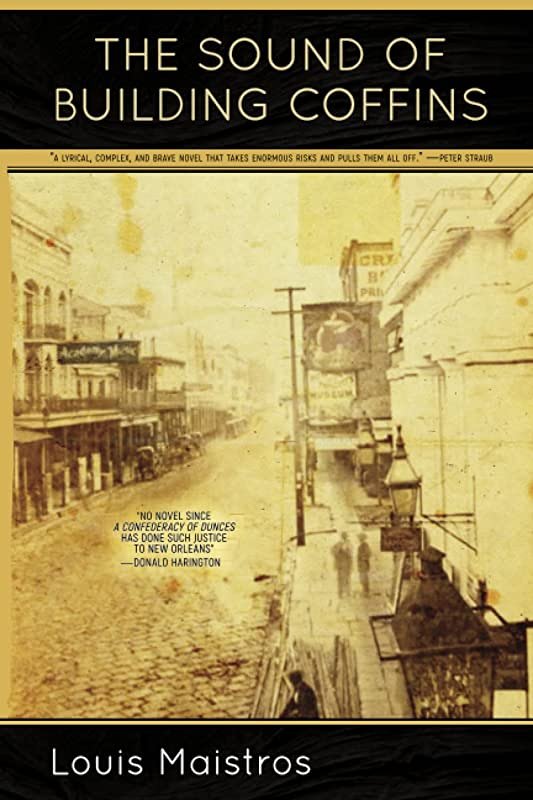
4. The Sound of Building Coffins (2009)
Louis Maistros
This is one of my favorite books. Its pages I often return to meander through the old streets and feel its energy and tongue. Louis realistic, fantastical depiction of New Orleans and its characters is a love letter to the city. The book kept me company when I lived in New York City and dreamed of planting roots into the same swampy, miasmatic, musical world that Louis’s characters live. The metaphysical blending of a supernatural world reminds me to be more present in the city; to drift into a daydream of what once was before cellphones. I can ramble on and on but I found this description from Octavia Books’ site to be better than what I could explain:
“It is 1891 in New Orleans, and young Typhus Morningstar cycles under the light of the half-moon to fulfill his calling, re-birthing aborted foetuses in the fecund waters of the Mississippi River. He cannot know that nearby, events are unfolding that will change his life forever - events that were set in motion by a Vodou curse gone wrong, forty years before he was born. In the humble home of Sicilian immigrants, a one-year-old boy has been possessed by a demon. His father dead, lynched by a mob, his distraught mother at her wits' end, this baby who yesterday could only crawl and gurgle is now walking, dancing, and talking - in a voice impossibly deep. The doctor has fled, and several men of the cloth have come and gone, including Typhus' father, warned off directly by the clear voice of his Savoir. A newspaper man, shamed by the part he played in inciting the lynch mob that cost this boy his father, appalled by what he sees, goes in search of help. Seven will be persuaded, will try to help...and all seven will be profoundly affected by what takes place in that one-room house that dark night. Not all will leave alive, and all will be irrevocably changed by this demonic struggle, and by the sound of the first notes blown of a new musical form: jazz. Maistros succeeds by populating the novel with hoodoo queens, jazzbos, tricksters, rounders, and various folks with one foot in reality and the other in the spirit world. A sprawling, complex, and ultimately absorbing work. --John Lewis, Baltimore Magazine.”
I’ll add that the discovery of what “the sound of building coffins” means was delightful.
Purchase here

5. Strange True Stories of Louisiana (1889)
George Cable
George Cable was a collector of stories. He was reviled throughout the South during his lifetime for his views of equality among blacks and whites. Despite having fought for the losing team during the Civil War, he had progressive ideas regarding equality. This book comprises dozens of stories that he collected throughout Louisiana, many of which happened in New Orleans or nearby. He’s a wonderful, witty, entertaining and modern writer who was friends with Mark Twain, if that gives an idea of his writing style.
Purchase here
If you missed PART 1, follow this link.
Books of New Orleans for Research and Pleasure (PART 1)
New Orleans has inspired generations of artists and writers. Here’s a collection of books that I’ve enjoyed.
““Never let the truth get in the way of a good story””

Jean-Pierre Lassus, “Veüe et Perspective de la Nouvelle Orleans,” 1726, Centre des archives d’outre-mer, Franc
New Orleans is the name we use to identify this parcel of land between the river and a lake. It is nearly an island both figuratively and literally, surrounded by water; water in its soil and water in the sky. It is like a minor deity who so many worship, find inspiration and joy despite its many shortcomings. Books were my entry port into its world and also my constant guide to understanding the city and its peculiar place in the U.S. What makes the city mythical are its many stories both true and false and most often that elusive “somewhere” in between.
My first foray into the mysteries of New Orleans was initiated in Florida as a teenager when a friend recommended a collection of short stories by Poppy Z. Brite called Wormwood. It was followed by a copy of a book called Journey Into Darkness…Ghosts and Vampires of New Orleans gifted to me by my sister after she visited the city in 2000. It made me curious to know a city that had so much dark history yet plentiful joy and celebration. What was this place?
It feels a relentless calling to write, read and make art from what I learn and to simultaneously interpret its stories with profound religiosity, fantasy and reverie but it’s impossible without the aid of books. The city is imbued into all of my work like an alchemical bond impossible to ignore or even reason. I believe that my job is to create a paradoxically realistic and dreamlike interpretation of I’ve learned, witnessed and experienced and make something from it.
I hope you enjoy this list. It’s a simple “top 10” (this being “Part 1”) but all of these have led me through the city, expanded my imagination or were simply enlightening reads, whether fictional or not. New Orleans is the U.S.’s most mythical city. Does truth matter?
Just a quick note: If you’re interested in purchasing any of these books, please consider supporting our local bookstores instead of Amazon. I’ve made it easier to locate these tiles with links below each description.

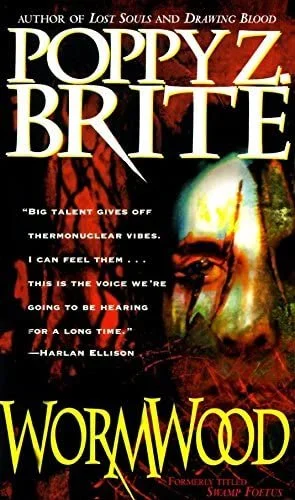
1. Wormwood (1996)
Poppy Z. Brite
This book was required reading for all goth curious kids at my high school. While not all of the stories in this book take place in New Orleans, it gives a fictional interpretation of some of the legends about pirate ghosts of South Louisiana such as “Sixth Sentinel”. The city appears a looming, unspeaking character in other stories, whispering an unknown language. My favorite description of the city is from the short story, wonderfully titled, “The Ash of Memory, The Dust of Desire”. Brite writes:
“Ancient, by American standards isn’t very old. Two or three hundreds years at most….and the abandoned mills and factories are no more than sixty years old. But I think of New Orleans, that city mired in time, where a whole religion evolved in less than two hundred years — a slapdash recipe concocted of one part Haitian graveyard dust, one part juju from the African bush, a jigger of holy communion wine, and a dash of swamp miasma. Magic happens when and where it wants to.”
Purchase here

2. Voodoo in New Orleans (1946)
Robert Tallant
Tallant provides accounts of Marie Laveau from witnesses and a story about her proposed mentor, Doctor John. There is also a story of her contribution to the aid of victims of the Yellow Fever epidemic of 1853 (the city’s worst) and how she conducted her ceremonies and gained notoriety. Some of the stories from this book have been refuted and some have alleged that it created a negative narrative about the history of voodoo although I’ve found that the author states that some of the stories he gathered from New Orleanians may have been exaggerated. The book also removes us back into old New Orleans and the neighborhood colloquially called Back-a-Town (Rampart Street area). One can imagine the world that raised Louis Armstrong.
Purchase here

3. Journey into Darkness…Ghosts and Vampires of New Orleans (1998)
Katherine Smith
This is a book that is commonly found in the French Quarter’s tourist shops. Many of its ghost and vampire stories are known while others are based on Smith’s first hand accounts. What I enjoy about this book is that many of its figures existed and contributed to the well known ghost stories often heard told by tour guides throughout the Quarter. It’s a fun introduction to many of the city’s dark entries.
Purchase here

4. The French Quarter (1936)
Herbert Asbury
While written in 1936 this book is one of my favorites when discussing topics of the French Quarter. It covers the foundation of the city, its ramparts, street names, notorious figures and its late adoption of electric street lamps. Many of the issues New Orleans struggles with today can be traced to the 1800s and some of these forgotten characters would be able to relate to the experiences of modern New Orleanians. I enjoyed the detailed accounts of bars, brothels, relations between blacks and whites and the conversion of the French Quarter into “Little Palermo”. This book was dutifully written to include as much detailed information as could fit into 400+ pages and is still relevant today. If you watched the Martin Scorsese film, Gangs of New York then you’re already familiar with the author’s work.
Purchase here

5. Bellocq’s Ophelia (2002)
Natasha Tretheway
This book of poetry by Pullitzer Prize winner, Natasha Tretheway is a first person narrative of sequential poems based on a photograph made in 1912 by EJ Bellocq of a light-skinned black woman working as a prostitute in the Storyville District named Ophelia. I love Tretheway’s writing and imagination. The author’s fictionalization of its titular character takes us to the beginnings of Ophelia’s career and her correspondences to a conservative childhood friend. We meet EJ Bellocq and experience the city through the eyes of a thoughtful narrator while tasting the summer rain that many of us enjoy.
Purchase here

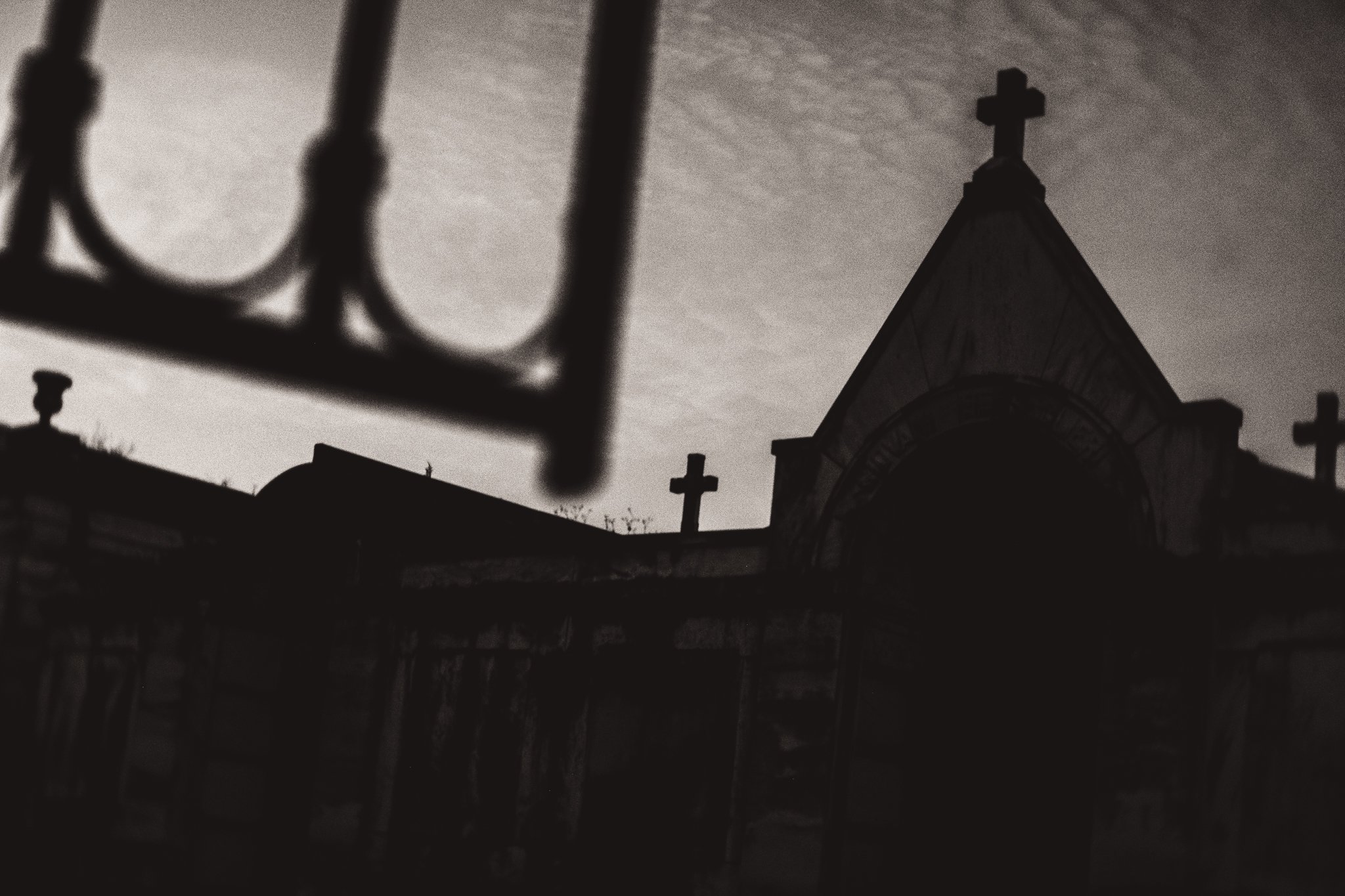
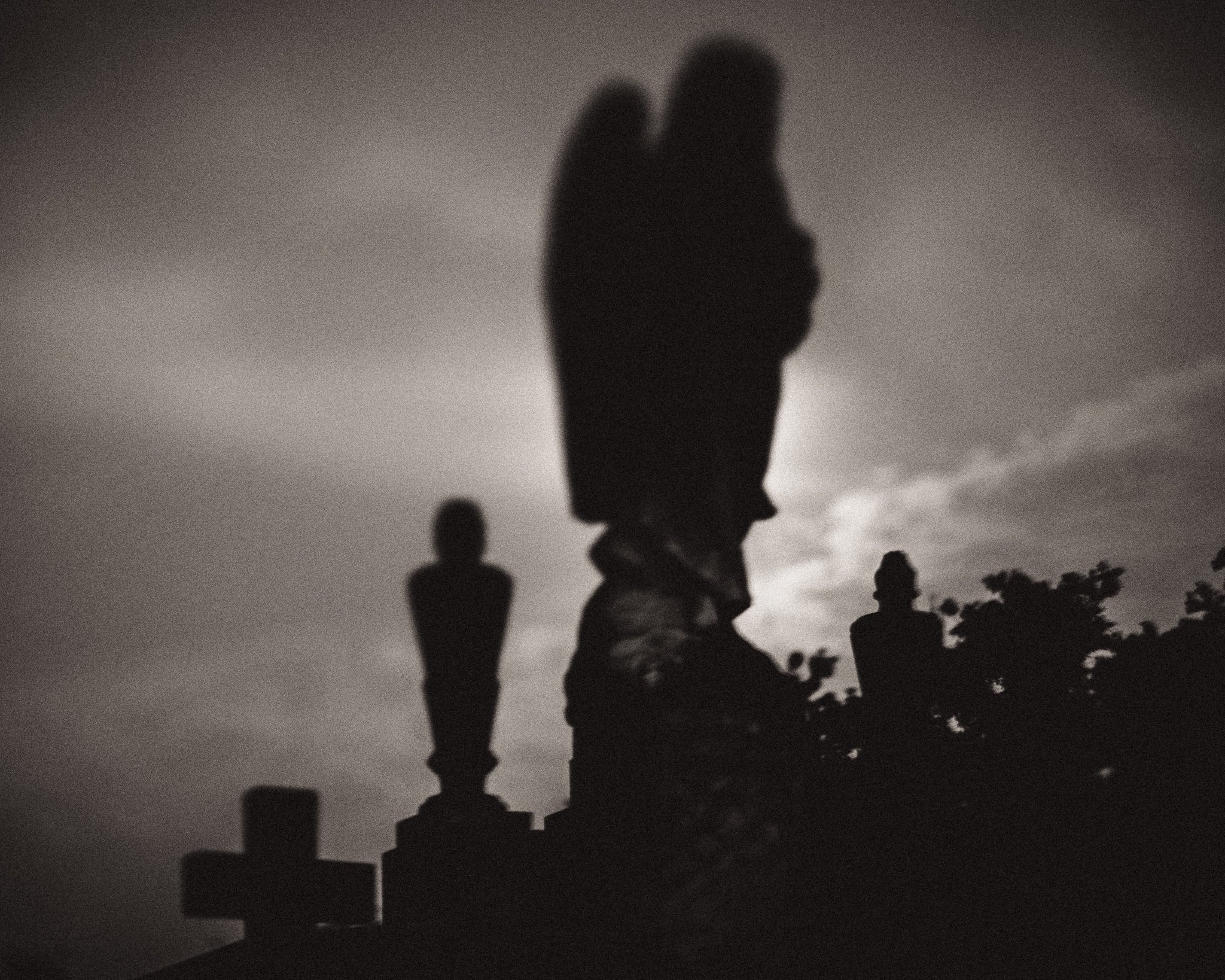
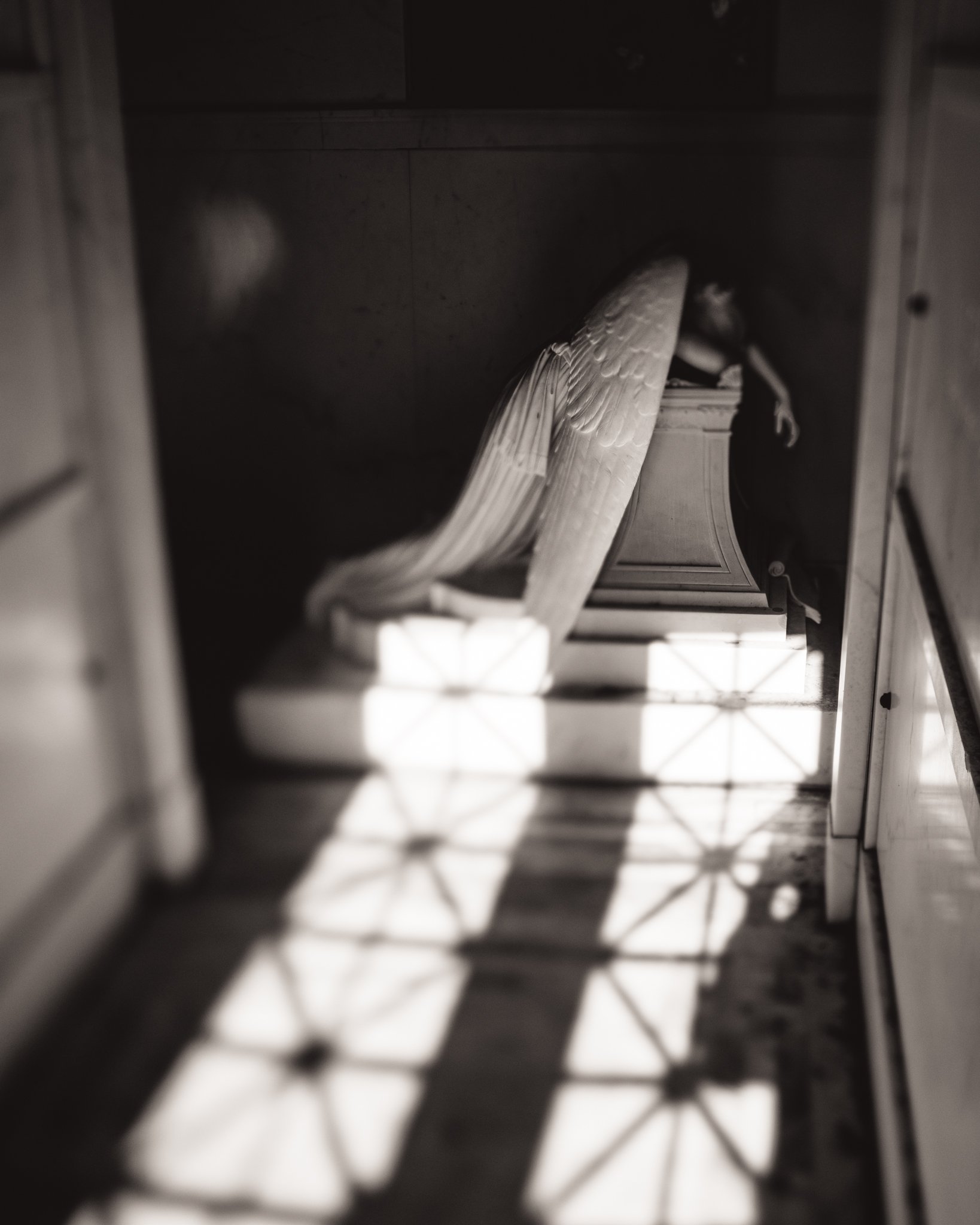
A Night’s Walk through a New Orleans Cemetery
“Nothing breathes here except me although I’m not alone.”
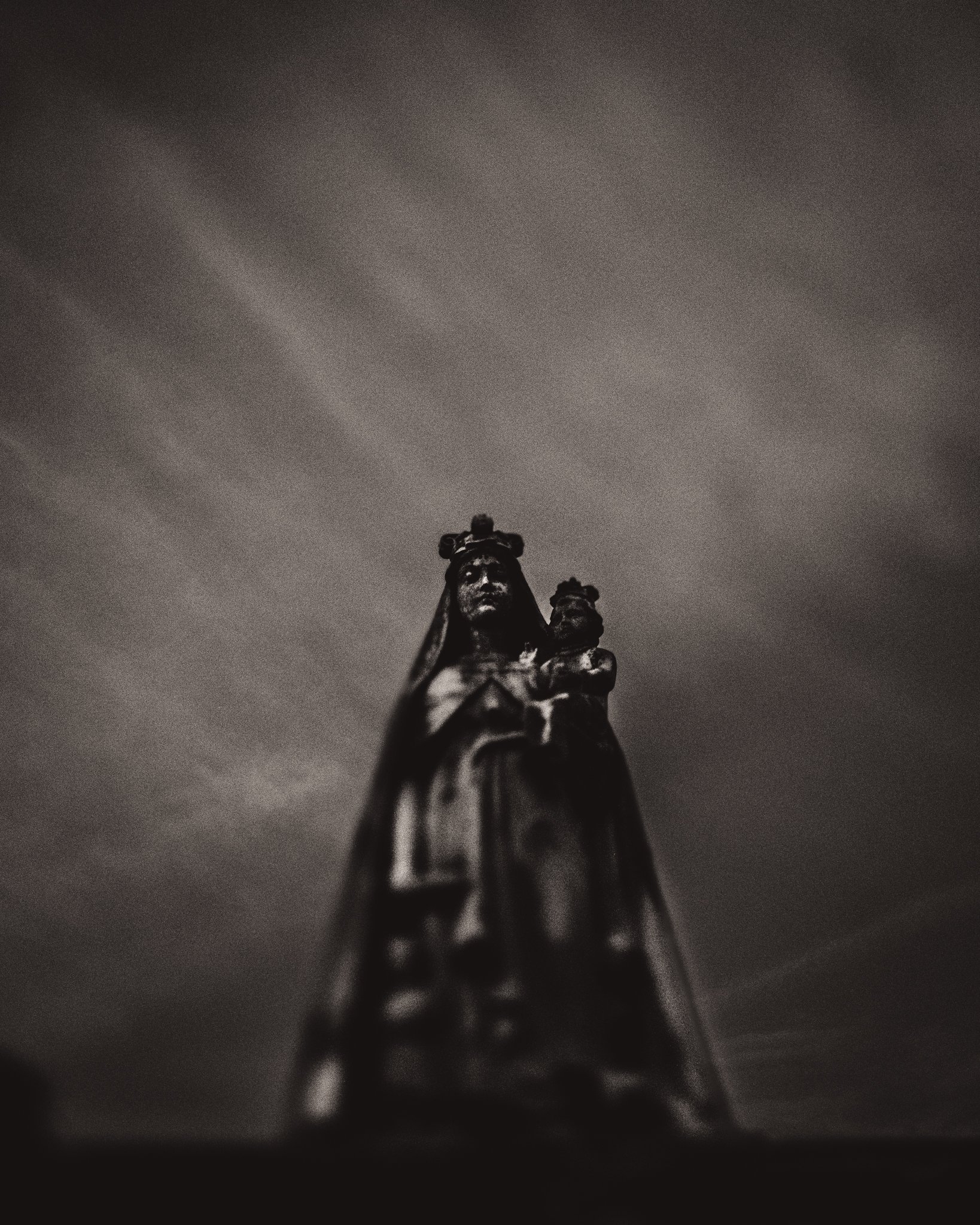
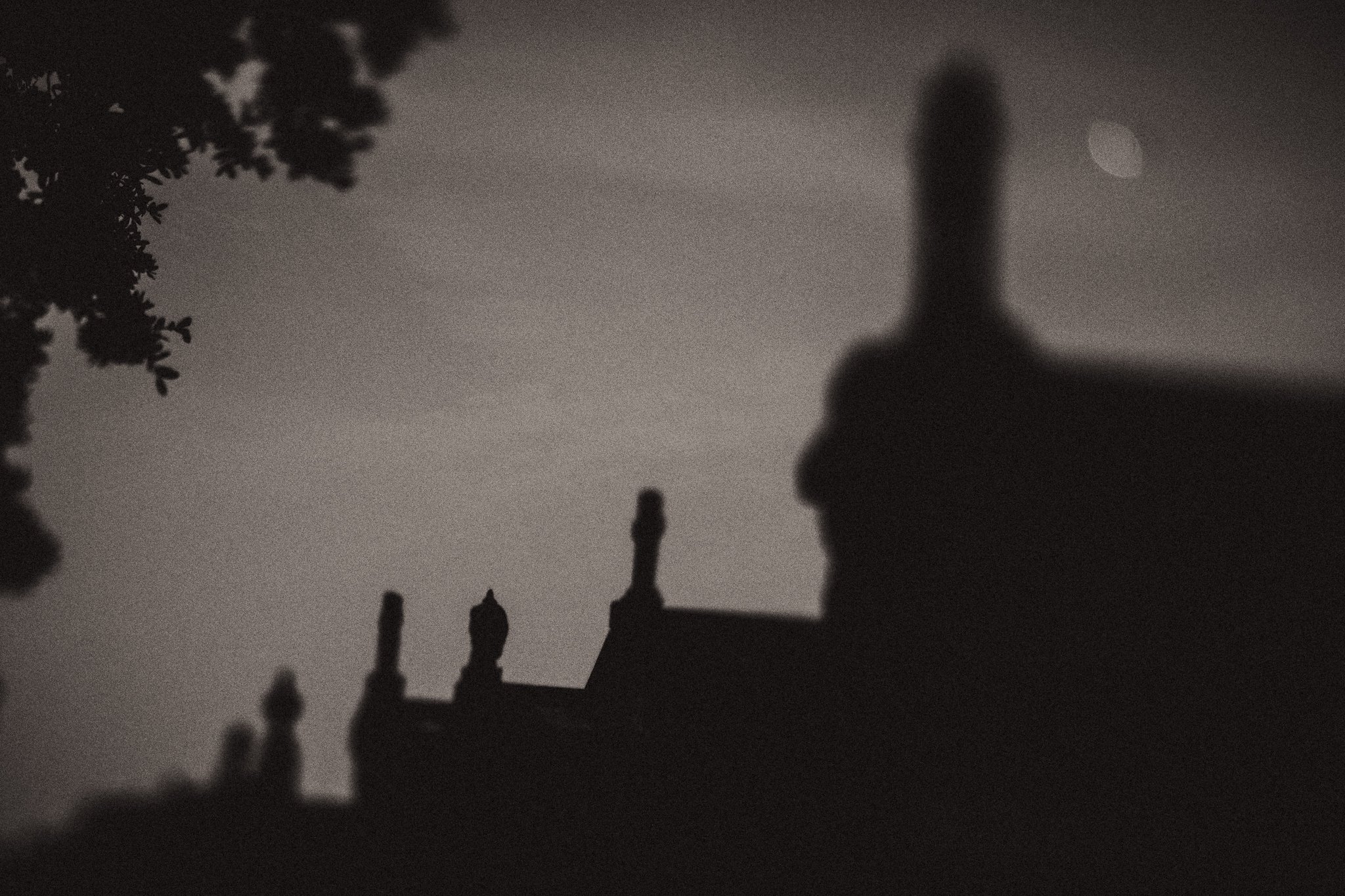
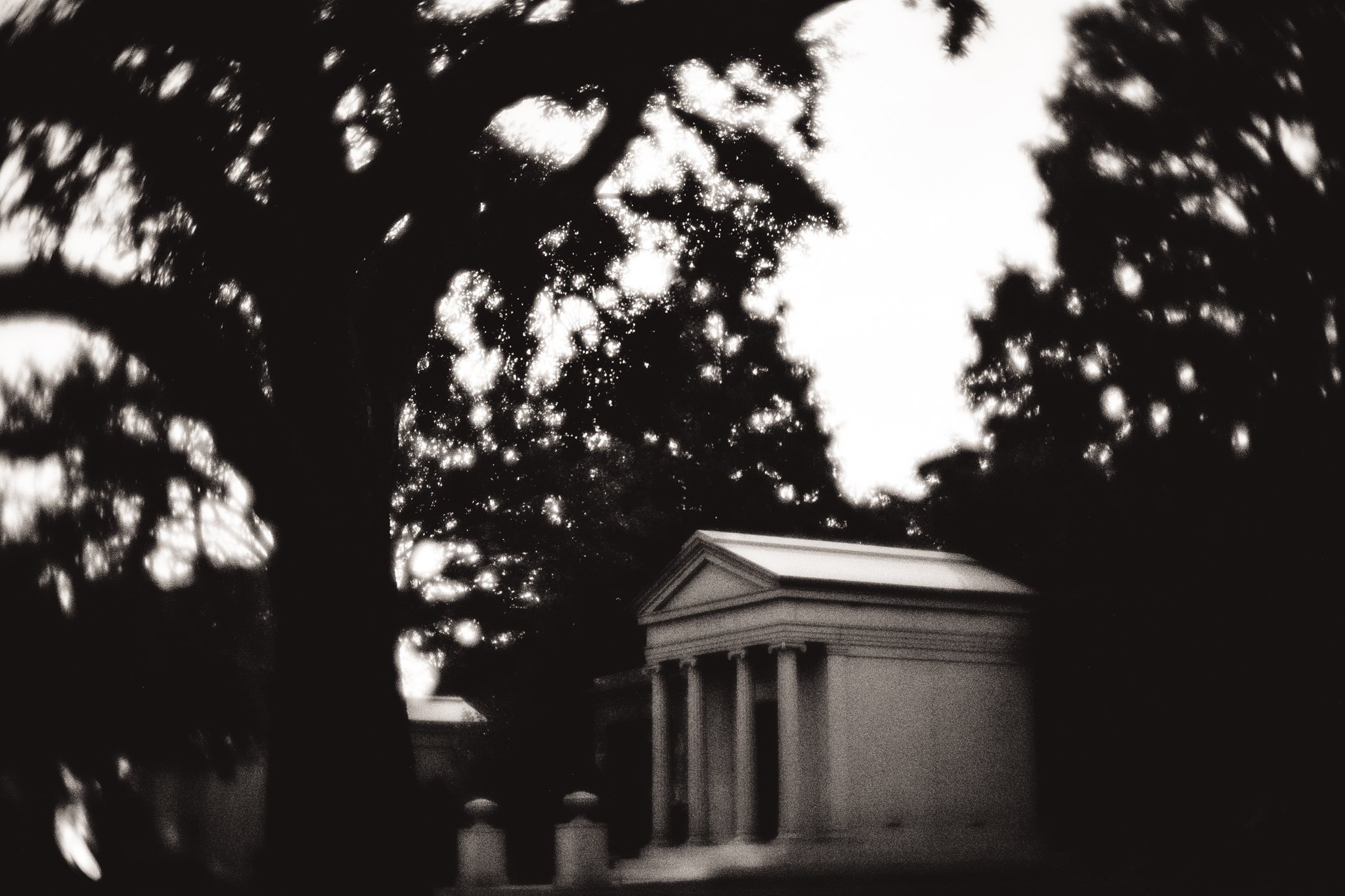
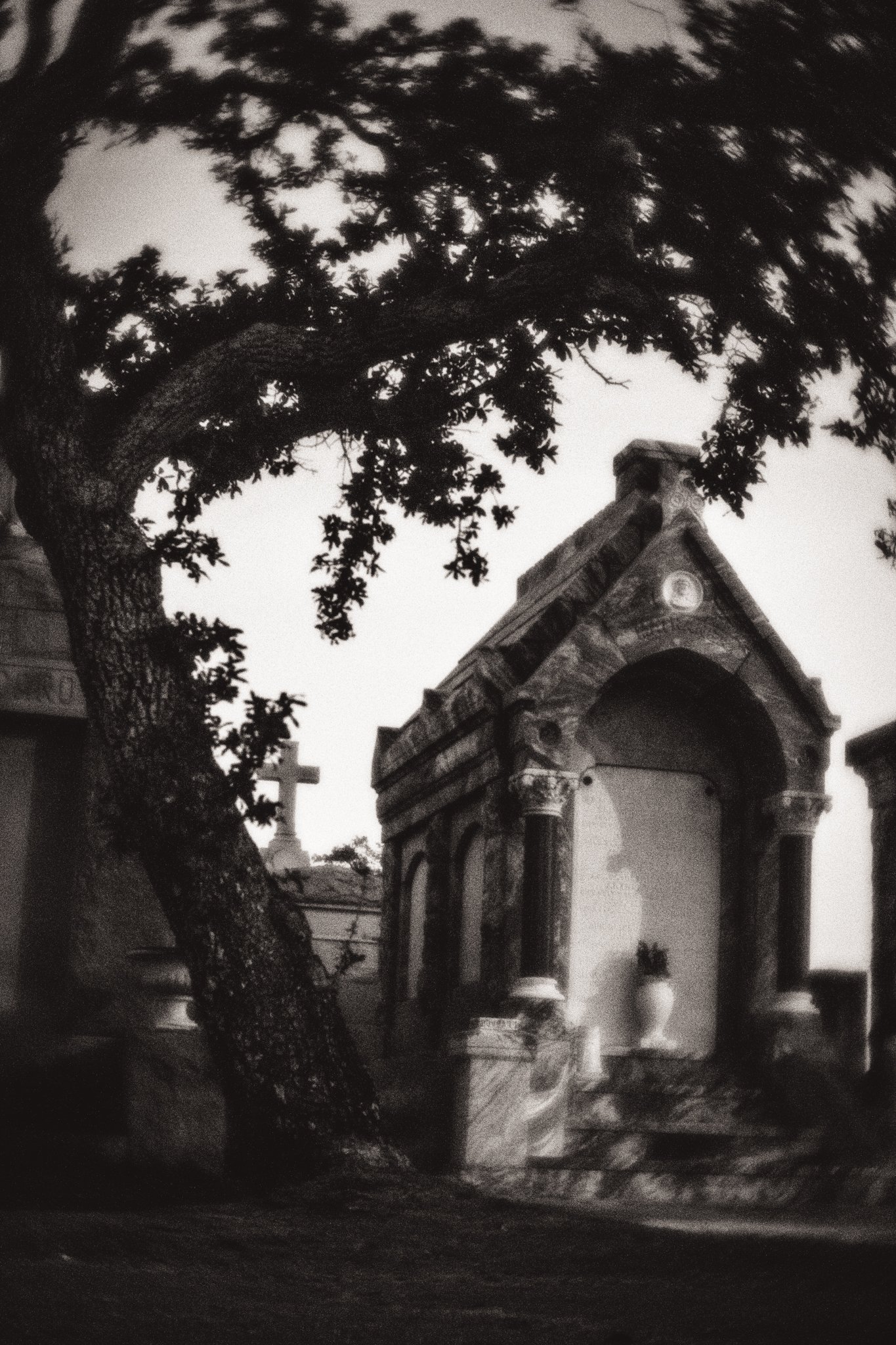
It’s comfortable here, looking at stone faces, obscured by moonlight and long shadows. There are dead people inside the ovens, some with streets named after them and others who were entombed with the delusions they volunteered to die for.
A soundtrack plays along my steps between the shadows of Cypress trees. It’s so typical, so romantic, so me. “This Twilight Garden” by The Cure and I’m a kid again thinking to old fears and the mysteries.
It doesn’t smell of death here like it does at St. Louis Number 2 Cemetery. It smells of the crisp, green air of autumn in New Orleans. Herbaceous.
The moon hangs in half in the midnight blue sky, the color of the Gulf of Mexico. Nothing breathes here except me although I’m not alone. The river breeze reaches us here, whispers old voices, caresses my forehead with its cool brush.
I raise my camera.
Breathe it in.
Click.
Every invisible eye watches from the crypts. Did something crawl up my leg?
This woman once approached me at St. Louis Cemetery Number 2. Compulsion rose from her lungs as she reached a hand to her chest, “I have to tell you that there’s a spirit that always follows you. They won’t do harm but they are very curious about you.”
Life is wasted on the living.
Many choose to avoid this place, this cemetery because they only see death. There is so much life though and stories. There are funny things that happen here. Anne Rice is entombed just down the lane from her arch rival, Al Copeland. Twisted humor is a New Orleans tradition. But there is this sixteen year old girl. A poem she wrote is taped to the face of her tomb.
I get the best advice from elders. They says that our life is a fearful one, chasing green faces of dead men, dying again in one pocket and resurrecting from another.
They elders say
We should chase dreams.
Do wild things.
Get weird.
Take risks.
So here I am, at the cemetery at night in New Orleans alone, but not alone, tempting spirits and violence with a camera. The oaks aren’t old enough to be famous but the trunks are wide enough for secrets and shades to hide.
Why do they follow me?
What was in the picture I saw when I was nine years old.
Smoke?
Vapor?
I can’t get them out of my head.